
When evaluating outdoor spaces, you might wonder which type of deck is the most common and why. Wood decks, especially those made from pressure-treated pine and fir, stand out due to their natural beauty and affordability. Their resistance to insects, rot, and decay through pressure treatment makes them a practical choice. However, these decks require consistent maintenance to uphold their look and durability. But is wood your only option? There are other materials to contemplate that might better suit your needs or climate, each with advantages and drawbacks. Let’s explore these alternatives.
Key Takeaways
- Wood decks offer natural beauty and affordability and require regular maintenance for longevity.
- Composite decks are durable, low-maintenance, and resist rot and warping.
- PVC decks are moisture-resistant, easy to install, and require minimal upkeep.
- Aluminum decks provide exceptional durability, resist corrosion, and are easy to clean.
- Rooftop decks optimize urban space with structural support and safety features.
Wood Decks
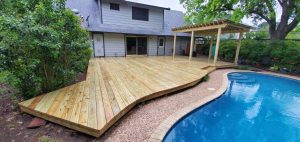 With their beauty and timeless charm, wood decks are often the cornerstone of outdoor living spaces. When choosing wood for your deck, it’s essential to consider pressure treatment.
Pressure-treated wood undergoes a process where preservatives are deep into the wood fibers under heightened pressure. This treatment enhances the wood’s resistance to insects, rot, and decay, greatly extending its lifespan. Commonly used types of pressure-treated wood include pine and fir, which are affordable and durable decking options.
Deck maintenance is another important aspect of owning a wood deck. Routine maintenance tasks include cleaning, sealing, and inspecting for damage. You should clean your deck at least once a year using a specialized wood cleaner to remove dirt, mold, and mildew.
After cleaning, applying a high-quality sealant helps protect the wood from moisture and UV damage. Regular inspections are essential to promptly identify and repair loose nails, warped boards, or structural issues.
Adhering to these maintenance practices guarantees your wood deck remains in excellent condition, preserving its aesthetic appeal and structural integrity for years. Good care and attention to detail will help you enjoy your outdoor space.
Composite Decks
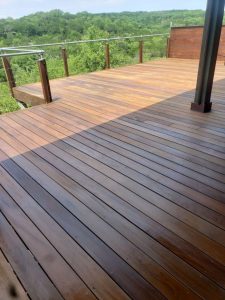
Composite decks offer a modern alternative to traditional wood decks. They combine durability with low maintenance requirements. These decks are crafted from wood fibers and plastic, providing a robust structure that resists common issues like rot, warping, and insect damage.
Composite materials outperform natural wood in terms of durability, especially in humid or variable climates.
One key advantage is the minimal upkeep. Unlike wood, composite decks don’t need annual staining or sealing. Routine cleaning with soap and water is usually good for maintaining their appearance.
Use a soft-bristle brush to remove dirt or debris from the surface for best results. Thanks to the protective cap layer in many brands, composite materials are less prone to fading and staining.
When considering a composite deck, it’s important to evaluate the specific product’s warranty and lifespan, which often range between 25 to 50 years. This long-term durability makes it a cost-effective option over time.
PVC Decks
Why consider PVC decks for your outdoor space? PVC decks offer many benefits, making them a superior choice for many homeowners.
First, let’s compare durability. PVC decks are renowned for resisting moisture, mold, and mildew. Unlike wood, which can warp and splinter over time, PVC maintains its structural integrity and appearance.
When it comes to installation tips, PVC decking is relatively straightforward. It’s lightweight, making it easier to handle and maneuver into place. You won’t need to worry about pre-drilling holes, as PVC is less prone to cracking.
Make sure you use stainless steel or coated screws to prevent any potential corrosion issues.
Consider these three key aspects to visualize the advantages of PVC decks:
- Longevity: PVC decks can last 25-30 years with minimal maintenance.
- Aesthetic Variety: Available in diverse colors and textures, you can match your deck to almost any style.
- Maintenance: Straightforward cleaning with soap and water is usually sufficient to keep it looking new.
Aluminum Decks
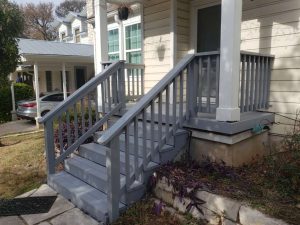 Aluminum decks offer a robust and modern solution for your outdoor living space. Known for their exceptional durability, they resist rust, corrosion, and warping, making them ideal for various climates.
Aluminum’s high strength-to-weight ratio guarantees that your deck remains sturdy without the bulk, allowing for innovative designs and efficient installation.
One of the standout durability features is its resistance to pests and decay. Unlike wood, aluminum doesn’t attract termites or rot over time, guaranteeing a long-lasting structure. The material’s inherent fire resistance adds a layer of safety, especially in fire-prone areas.
Maintenance tips for aluminum decks are straightforward and minimal. Day-to-day cleaning with mild soap and water will keep the surface looking pristine. A non-abrasive cleaner can be used without damaging the finish for tougher stains.
Inspecting the deck periodically for signs of wear or loose fasteners is advisable, guaranteeing that all components remain secure.
Additionally, aluminum decks typically have protective coatings that enhance their weather resistance and aesthetic appeal. These coatings often include UV protection to prevent fading, maintaining the deck’s modern appearance for years.
Rooftop Decks
While aluminum decks provide a durable and modern solution for outdoor spaces, rooftop decks offer a unique vantage point and maximize usable area. When planning a rooftop deck, design considerations are essential. Make sure your building’s structure can support the additional weight. Opt for lightweight yet durable materials like composite decking.
Consider the following:
- Safety features: Incorporate railings and non-slip surfaces to prevent accidents.
- Aesthetic choices: Choose furnishings and plants that complement your overall design.
- Installation challenges: Address waterproofing and drainage to avoid water damage.
Maintenance tips for rooftop decks include regular inspections to identify and repair damage. The deck surface should be cleaned frequently to prevent debris buildup, which can cause staining or deterioration. Weather-resistant sealants should also be used to protect against the elements.
Cost factors vary based on materials, labor, and additional features like lighting or built-in seating. Although the initial investment can be high, a well-designed rooftop deck adds significant value to your property and provides a serene escape from urban life.